
Get Your Free Quote
We will get back to you as soon as possible.
Please try again later.
Gutter Guard Installation in Lakewood, CO
Lakewood homes need hail-rated micro-mesh gutter guards built for Front Range weather. Schedule an on-roof assessment and we'll match guards to your gutter type and pitch.
Gutter Guard Installation
Hail and wind hit gutter guards hard here in Lakewood almost every year. This page covers gutter guard installation for leaf, pine needle, and hail debris control. As a local roofing contractor serving Lakewood homeowners, we keep scheduling simple, and most jobs finish in a single day.
Every install starts with a full roof-to-gutter inspection. That's our standard on every roofing contractor job, not an upsell. One local wrinkle to know upfront: rehanging or upsizing your gutters during the job can trigger a Jefferson County code review.
Contact Us
Building Quality Roofs That Stand The Test Of Time.
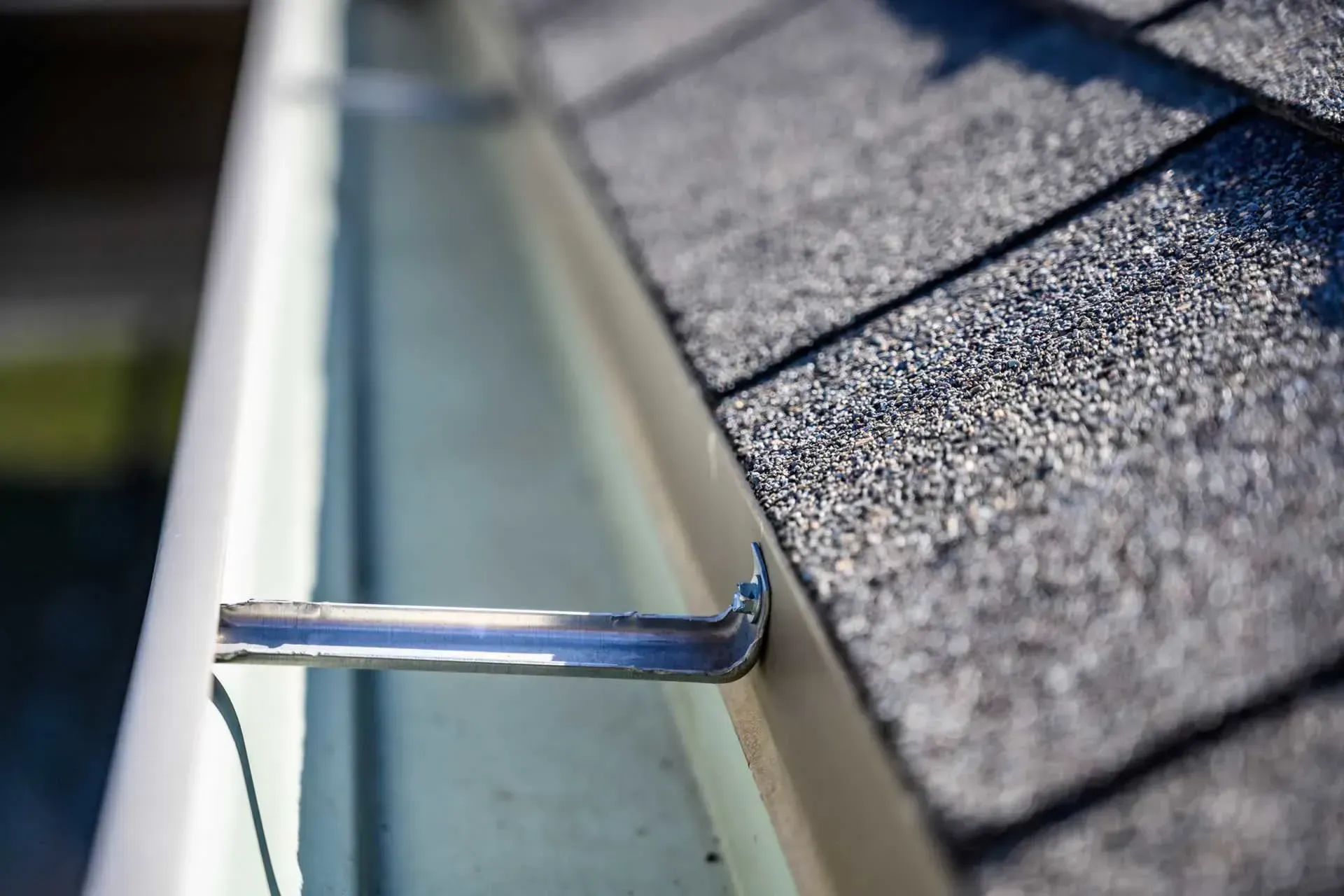
Micro-Mesh Systems Handle Lakewood's Hail and Debris Best
Micro-mesh gutter guards use a fine stainless screen. Water flows through, but leaves, pine needles, and grit stay out. If your home sits near pine trees or takes a lot of hail, we usually recommend this style first.
Front Range hail measuring 1 to 1.75 inches hits most Lakewood summers. Micro-mesh holds up against that better than aluminum or foam guards do. It blocks cottonwood fuzz and heavy pine needle drop, too, without slowing water flow.
What homeowners don't realize is that plastic and foam guards crack from UV exposure within 3 to 5 years at this elevation. All-metal systems hold up much longer.
Professional Installation Prevents Common Gutter Guard Failures
Gutter guards only work if they're measured, fitted, and fastened right. Get this wrong, and wind or snow load tears them loose fast. Homeowners weighing a DIY kit often run into fit and fastening trouble.
Lakewood's Chinook winds can gust 60 to 90-plus miles per hour near the foothills. Correct fastening keeps guards attached through that kind of storm instead of ripping free.
One thing we see constantly on Lakewood calls: loose-fit or adhesive-tab guards torn off in a single wind event. Every install we do gets mechanically fastened into the gutter lip, not just pressed on.
Older Lakewood Homes Need Field-Fit Guard Installation
Plenty of Lakewood homes still carry original 1960s aluminum gutters. Those gutters usually aren't a standard size anymore. If you're in an older ranch or split-level, this matters more than you'd think.
Neighborhoods like Applewood and Green Mountain have narrow, deep-set fascia boards from the original construction. Field-fit brackets seat properly on warped or repainted gutter lips where snap-in guards won't.
Most of the time on these older homes, standard guards don't sit flush. So our techs hand-fabricate spacer shims on-site to get a tight, proper fit.
Gutter Guards Solve Some Problems But Create Others If Installed Wrong
Guards cut down on clogging. They can also trap moisture if the gutter underneath already has issues. This matters most for homes with sagging or poorly pitched original gutters.
Many original K-style gutters around Lakewood sag or pitch wrong from age. Fixing that pitch problem before the guard goes on avoids locking in poor drainage for good.
What we run into often: guards installed over a poorly pitched gutter, hiding a drainage problem instead of fixing it. That's why we check pitch first, every time, before any guard gets mounted.
Best Time to Install Gutter Guards in Lakewood Is Before Storm Season
Spring installation gets guards in place before hail and monsoon storms peak. Homeowners planning ahead of Lakewood's summer storm season save themselves a scramble later.
Hail season runs May through August here. July and August monsoon storms overlap right on top of it, which stacks the risk.
One pattern we see every year in Lakewood: guard failure and callback rates spike in this window. Scheduling a check before storm season starts matters more here than in most markets.
What to Expect During a Gutter Guard Installation
A technician inspects your gutters, fascia, and roofline before fitting or fastening anything. First-time buyers get a clear, predictable process from start to finish. Here's how a typical install runs:
- Inspect gutters, fascia, and roof pitch for damage or rot.
- Confirm gutter size and profile — often 4-inch or 5-inch K-style on older homes.
- Select hail-rated stainless micro-mesh guards built for Front Range conditions.
- Field-fit brackets to match your existing gutter lip and fascia depth.
- Mechanically fasten guards into the gutter lip, not just friction-fit tabs.
- Check drip edge and flashing before final mounting.
- Test water flow and clear debris chutes before we call it finished.
Loose-fit guards don't survive Chinook wind gusts, so step 5 is non-negotiable on every job we run.
What we run into often on reroofed Lakewood homes: cedar-to-comp jobs that left improper flashing behind. Neighborhoods from Belmar to the older Molholm area mix original and reroofed homes, so flashing condition varies block to block. Installers check this before mounting guards, so water can't get behind the fascia later.
Frequently
Asked
Questions
Is gutter guard installation worth it in Lakewood?
Yes, it cuts down on clogging and hail damage. Guards reduce cleaning trips and protect gutters from pine needles, cottonwood fuzz, and storm debris common here.
What is the best gutter guard material for Lakewood homes?
Stainless steel micro-mesh holds up best in this area. It resists hail impact and UV breakdown better than plastic, foam, or perforated aluminum styles.
Can I install gutter guards myself?
DIY kits often don't fit older Lakewood gutters well. Original 1960s K-style gutters are frequently warped or repainted, so brackets need field-fitting for a tight seal.
What problems can happen with gutter guards?
Guards can trap moisture or hide drainage issues. If the gutter is already sagging or pitched wrong, adding a guard locks in the problem instead of solving it.
Do gutter guards need a permit in Lakewood?
Most installs don't need one. Rehanging or upsizing gutters as part of the job can still trigger a Jefferson County code review.
When should I install gutter guards?
Spring, before hail and monsoon season begins. Getting guards in place ahead of May through August storms lowers the chance of mid-season failures.